

Research
Papers, models, data and advances in robot learning.
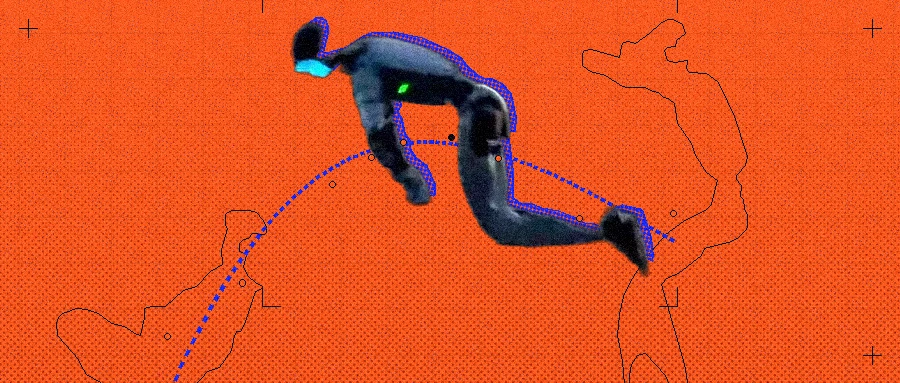
UC Berkeley's SuperMimic Slashes Compute for Humanoid Whole-Body Control
Accepted as an oral paper at CoRL 2026, the SuperMimic framework uses a differentiable world model to train humanoid whole-body control on a single GPU in three hours, outperforming previous methods that required massive GPU clusters.
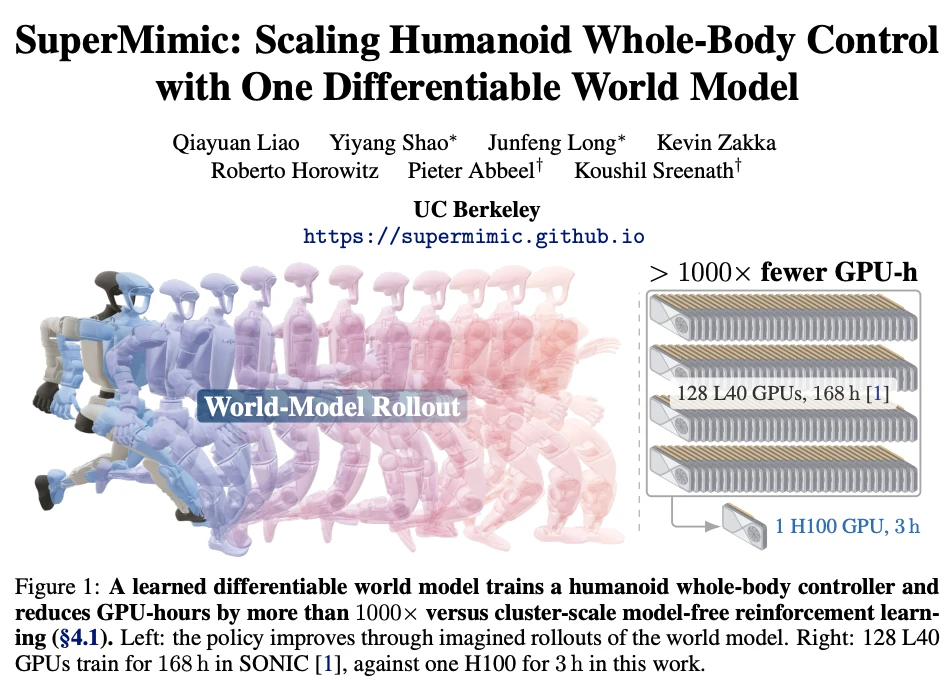
UC Berkeley's SuperMimic Trains Humanoid Whole-Body Control on a Single GPU in 3 Hours, Surpassing 128-GPU Baseline
A UC Berkeley team introduced SuperMimic, a framework that uses a single differentiable world model to scale humanoid whole-body control. The approach trains on a single NVIDIA H100 GPU in 3 hours to outperform the SONIC baseline, which required 128 NVIDIA L40 GPUs over 7 days, reducing GPU-hour costs by more than 1,000 times.
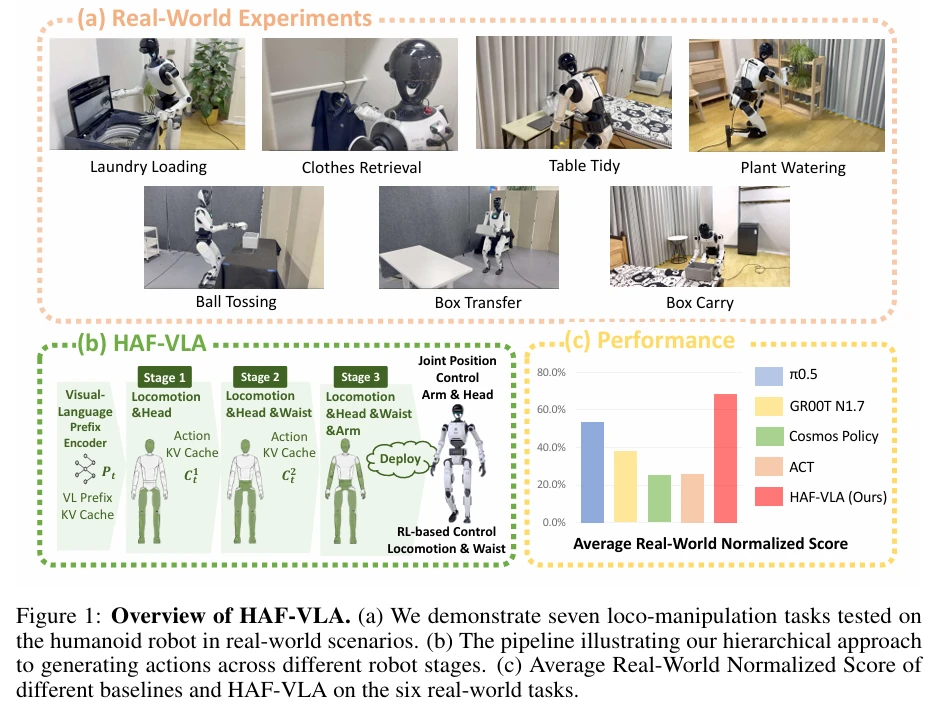
HAF-VLA Enables Hierarchical Generation of Coordinated Full-Body Actions in Humanoid Robots
A joint team from Peking University, Tsinghua University, and other institutions has proposed HAF-VLA, a hierarchical framework that enables humanoid robots to generate coordinated full-body actions by sequentially planning movements along the kinematic chain to avoid compensatory instability.
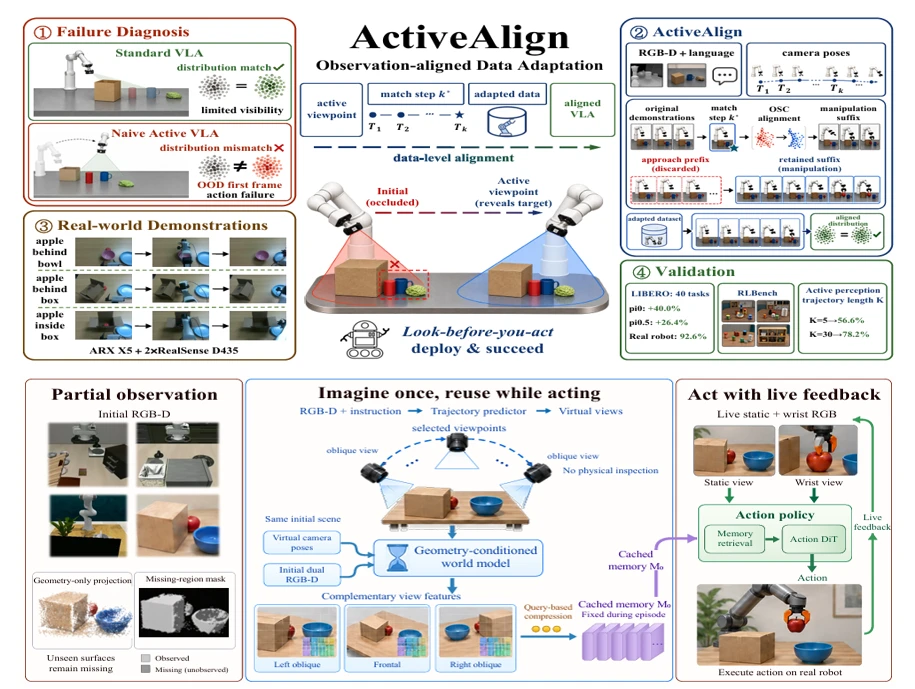
Fudan Team Bridges Active Perception and Vision-Language-Action Models to Overcome Viewpoint Shifts
Two papers from Fudan University introduce ActiveAlign and AWAM, which align training data and representations with active camera movements to prevent distribution shifts in vision-language-action models when robots adjust their viewpoints to overcome occlusions.
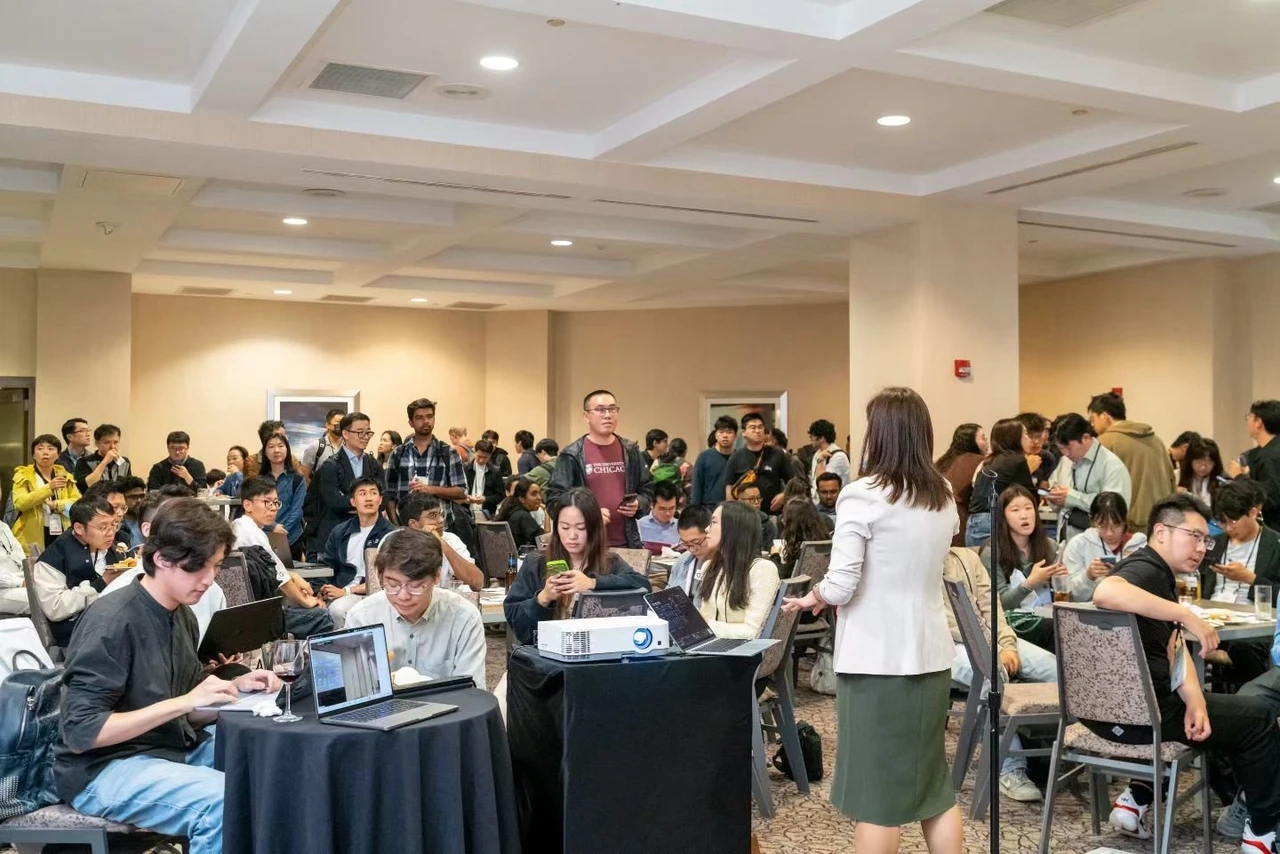
In Conversation with Saturday Robotics Founder Junfan Zhu: “By the Time a Robotics Paper Is Published, Its Approach May Already Be Out of Date”
How Junfan Zhu is building a cross-disciplinary robotics research community in the Bay Area while working on better ways to evaluate AI systems in the physical world, and why he thinks robotics has yet to have its benchmark moment.

Robots Can Run Marathons, So Why Is It Still So Hard to Reach the Front Desk?
Vita Dynamics introduces VbotNav-0, an asynchronous cloud-edge navigation framework that enables robots to seamlessly transition from outdoor streets to indoor environments using unified route tokens and a three-tier decision architecture.
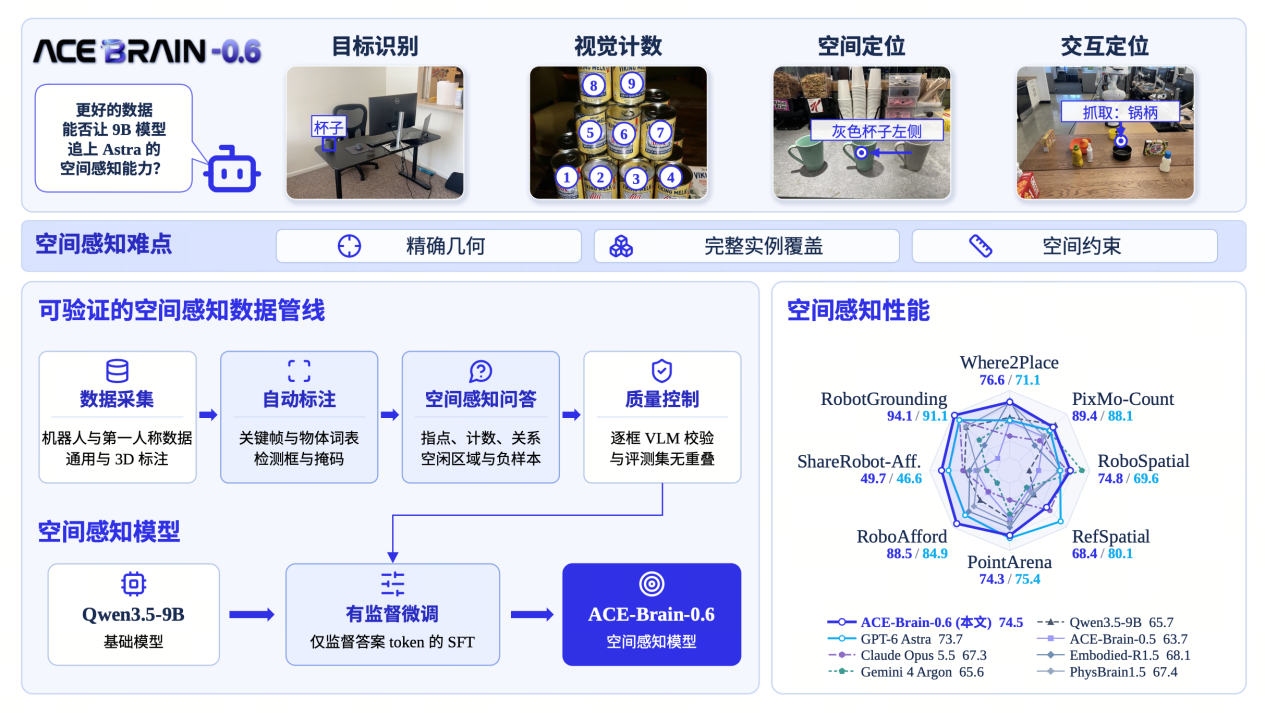
ACE Robotics Releases ACE-Brain-0.6, Outperforming GPT-6 Astra in Six Spatial Anchoring Tests
ACE Robotics has released the 9B embodied AI model ACE-Brain-0.6, which scored higher than GPT-6 Astra in six of eight visual spatial anchoring benchmarks. The team attributes performance gains to data expansion from 260,000 to approximately one million training samples.
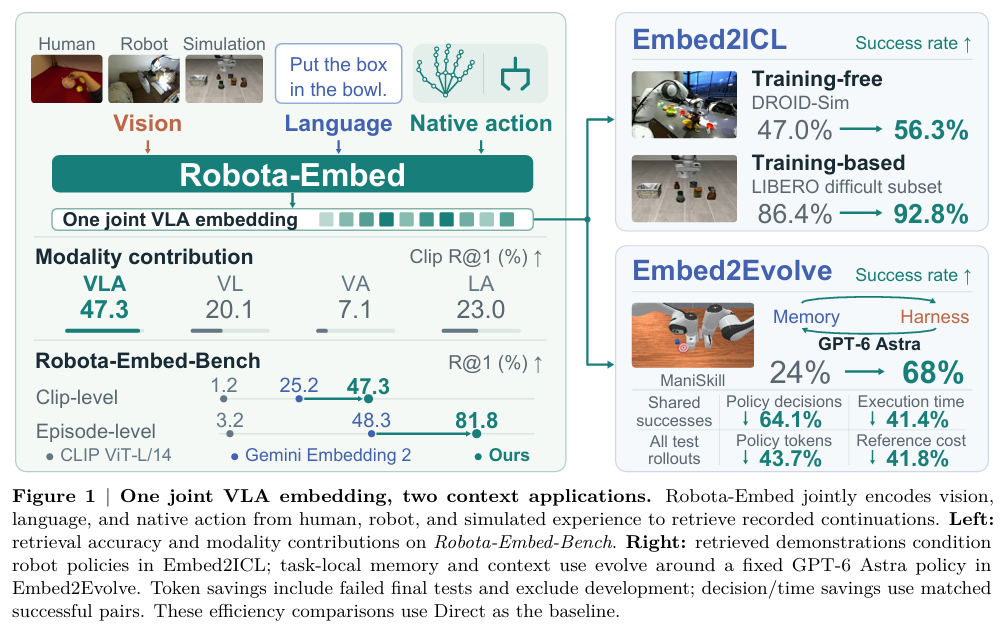
Robota-Embed: Joint Action and Visual Encoding for Robot In-Context Learning
A joint team from NVIDIA, MIT, UC Berkeley, Oxford, and CMU introduces Robota-Embed, a unified VLA embedding that incorporates action data into experience retrieval. The model significantly improves robot in-context learning by matching future behavior logic rather than just visual similarity.
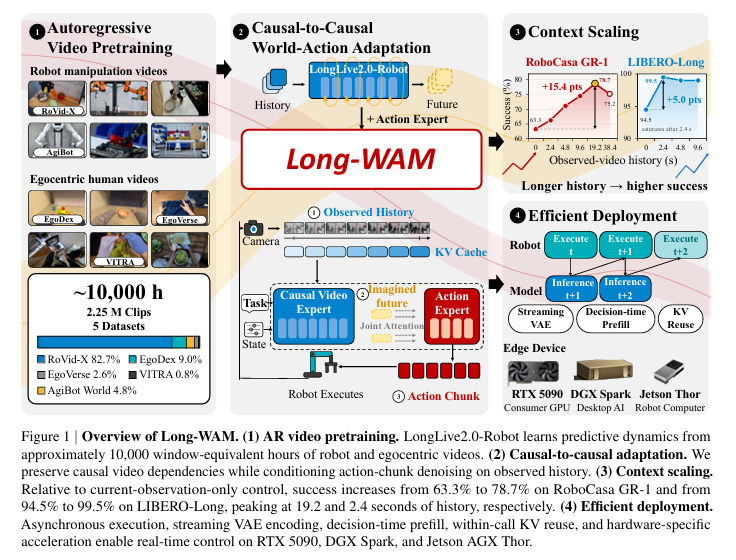
NVIDIA and MIT Researchers Show Long-Context Robotics Requires Autoregressive World Models
A joint paper from NVIDIA, MIT, HKU and UCSD demonstrates that simply extending visual history does not improve robot control; the model must first learn autoregressive prediction to effectively use long contexts. On the RoboCasa GR-1 platform, task success rates rose from 63.3% to 78.7% when context was extended to 19.2 seconds.

PrimeBot’s Hao Dong: Lowering Post-Training Costs for Home Robots
At IROS 2026, PrimeBot and Peking University hosted a dual-arm manipulation challenge. Chief Scientist Hao Dong discusses how post-training improves reliability in home environments and introduces HIL-UMI to lower data collection costs.

I-BFM: Unsupervised Reinforcement Learning Enables Robust Humanoid Interaction After Falls
Researchers from Tongji University and Tsinghua University introduce I-BFM, a behavior foundation model that uses forward-backward representation to allow humanoid robots to recover from falls and adapt to disturbances without re-planning trajectories.
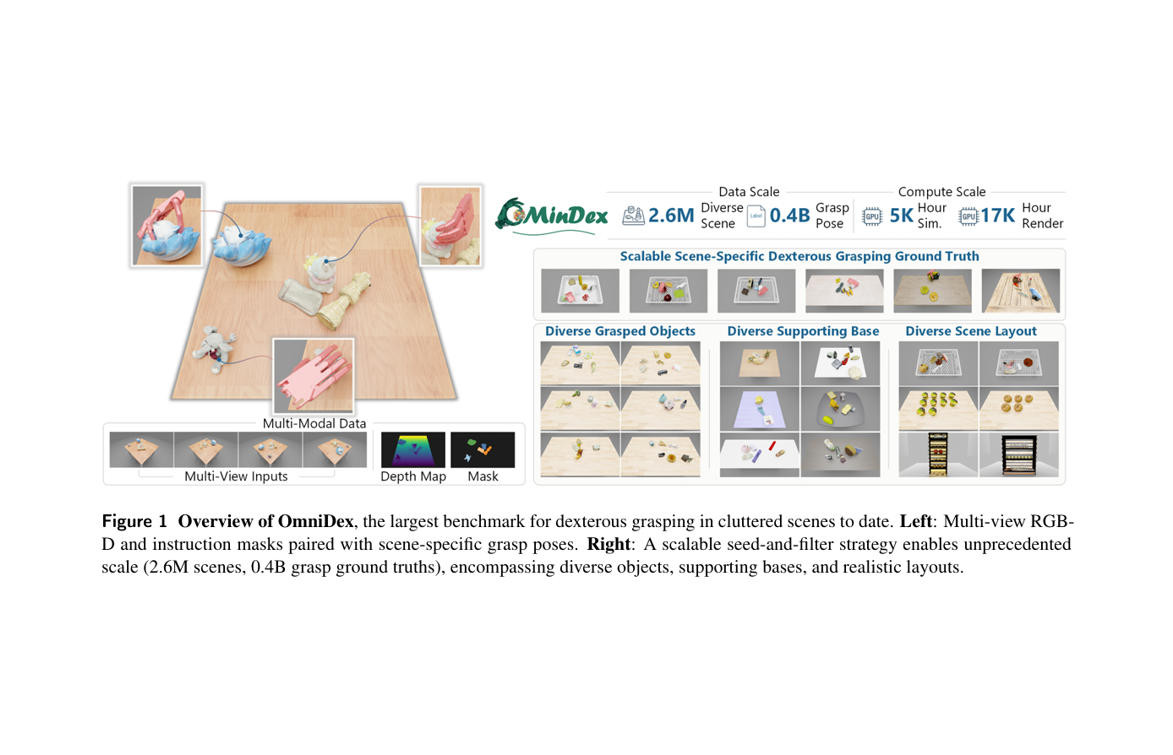
OmniDex Dataset Scales Dexterous Grasping to 2.6 Million Cluttered Scenes
A team led by Xiaogang Wang and Hongsheng Li publishes OmniDex, a dataset of 2.6 million cluttered scenes and 400 million grasp annotations for dexterous hands, using offline pre-computation and soft winner-take-all learning to enable high-precision grasping without post-inference optimization.