

Training
10 related stories
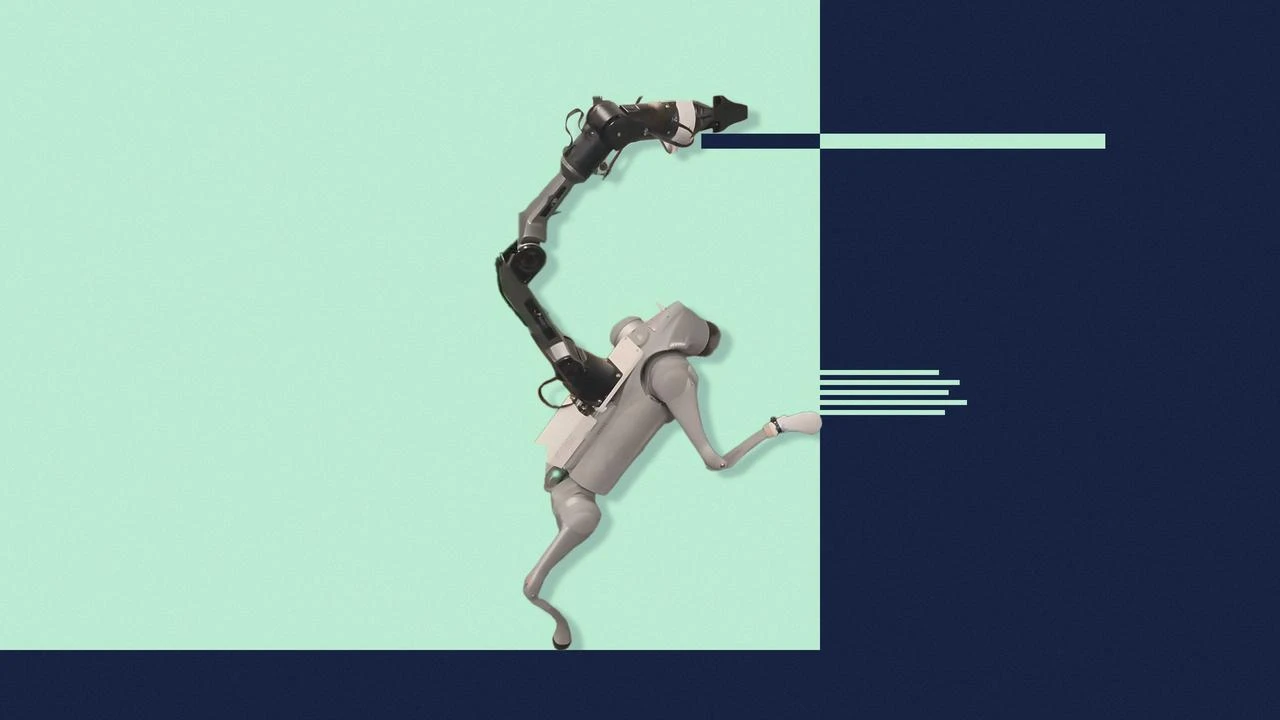
Carnegie Mellon Researchers Introduce ELEVATE Framework to Help Quadrupeds Acquire New Controllers from Task Failures
Quadruped robots with manipulators face a hard limit when required motions are absent from pre-trained libraries. The new ELEVATE framework enables these robots to autonomously diagnose missing physical capabilities during task failures and train new whole-body controllers using reinforcement learning.
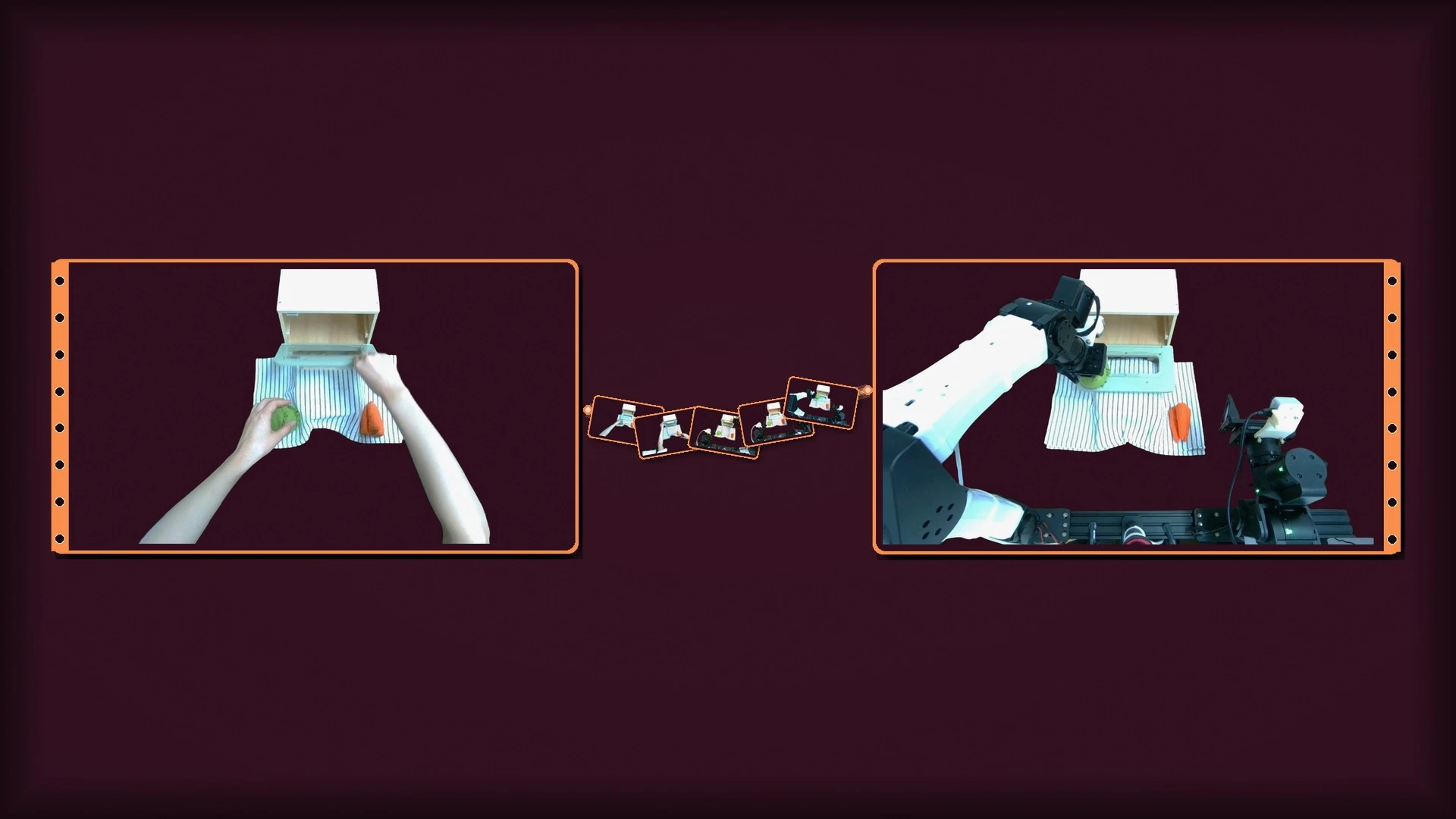
NVIDIA Proposes ThinkWorld to Train VLAs on Unannotated Human Videos via Chain-of-Dynamics and Imagined Futures
NVIDIA and KAIST introduce ThinkWorld, a vision-language action framework that leverages chain-of-dynamics reasoning and imagined future states to extract training signals from unannotated human videos for robot policy learning.
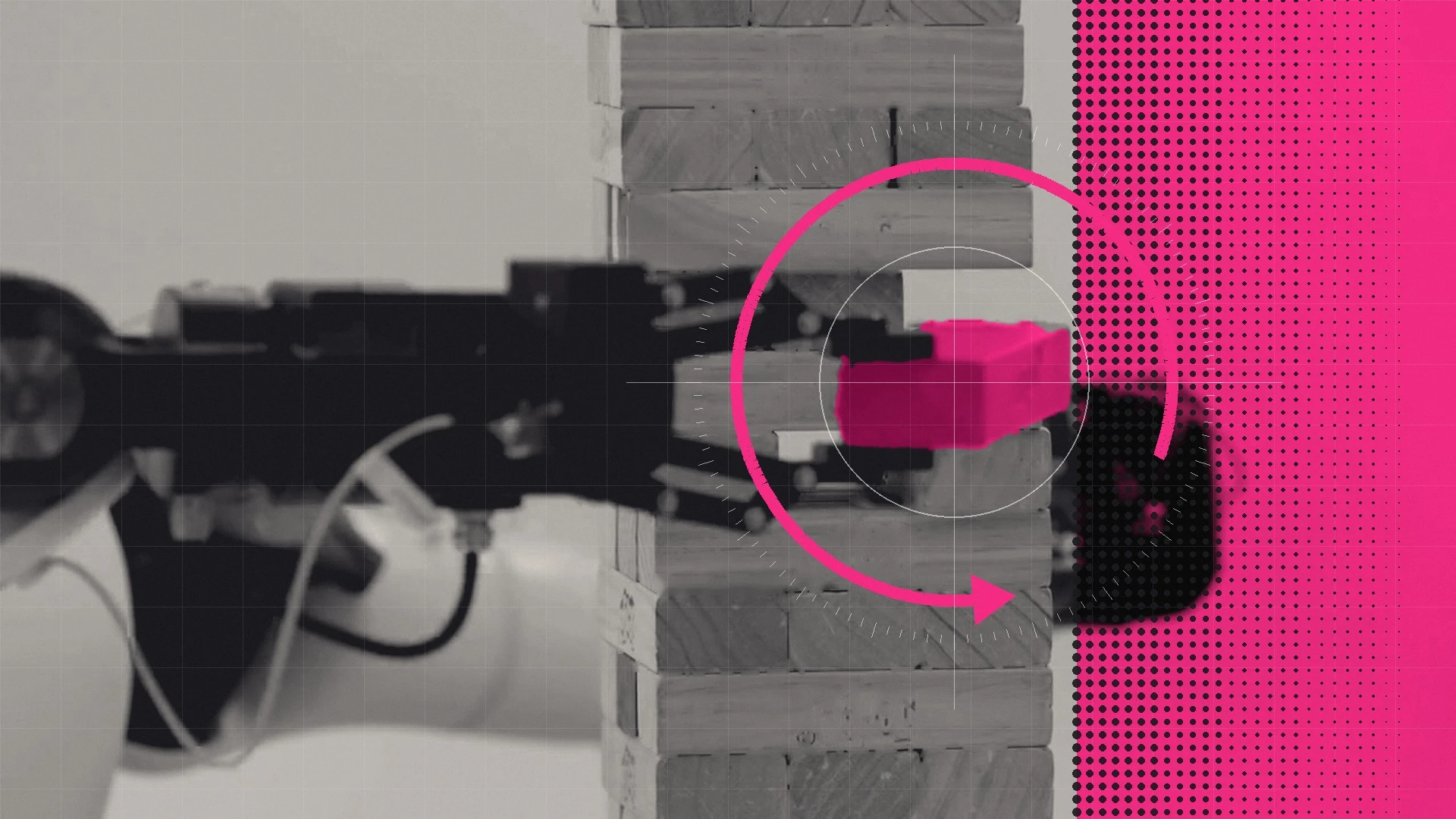
AgiBot's Rollback Method Uses World Model 'Rewind' to Surpass Human Averages in 8 Hours of Real-Robot Training
AgiBot, Beihang University, and the National University of Singapore introduced Rollback, a policy improvement method that backtracks within a world model to explore alternative actions. Trained on a single real robot for eight hours, the approach outperformed human baselines in ball tossing and tabletop curling by eliminating costly physical scene resets.
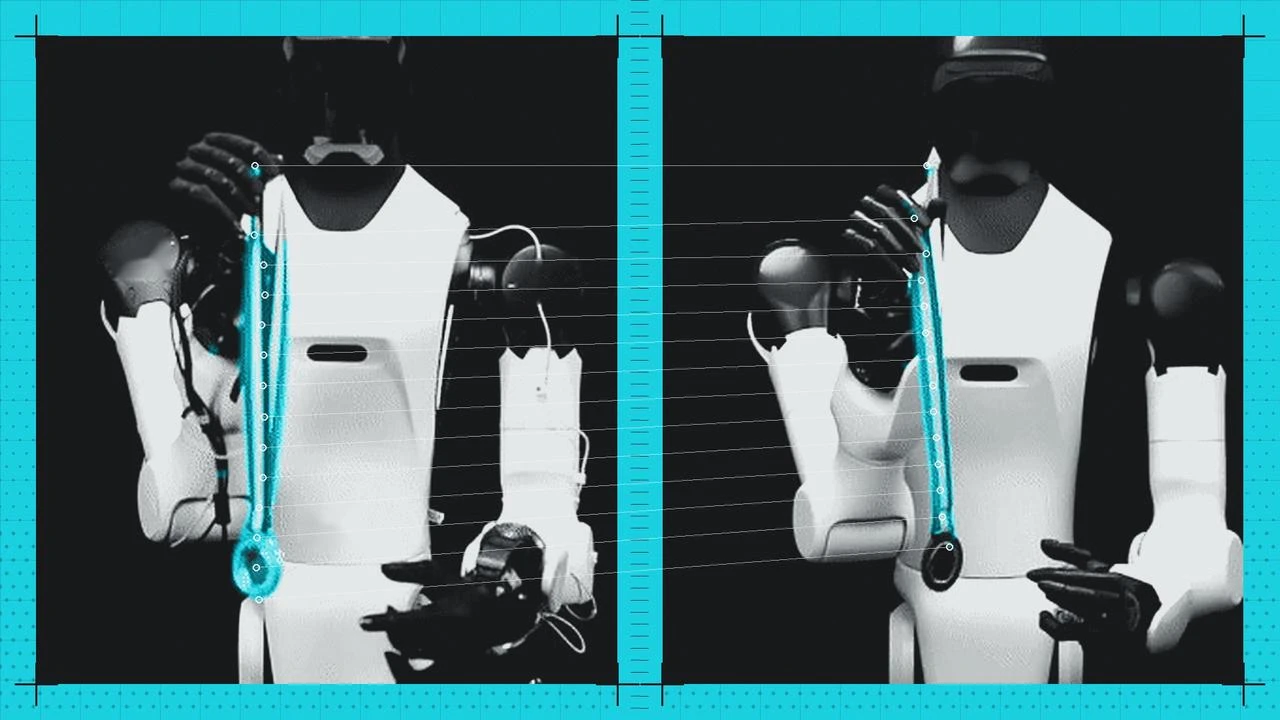
AgiBot Upgrades Genie Sim to Unify Robot Training and Evaluation via Flexible-Body Simulation
Folding a towel or tightening a drawstring bag is simple for humans but challenging for robots, as fabrics and ropes continuously deform and contact friction alters subsequent manipulation conditions. If simulation fails to replicate these dynamics, robots may perform well virtually but fail in real-world deployment.
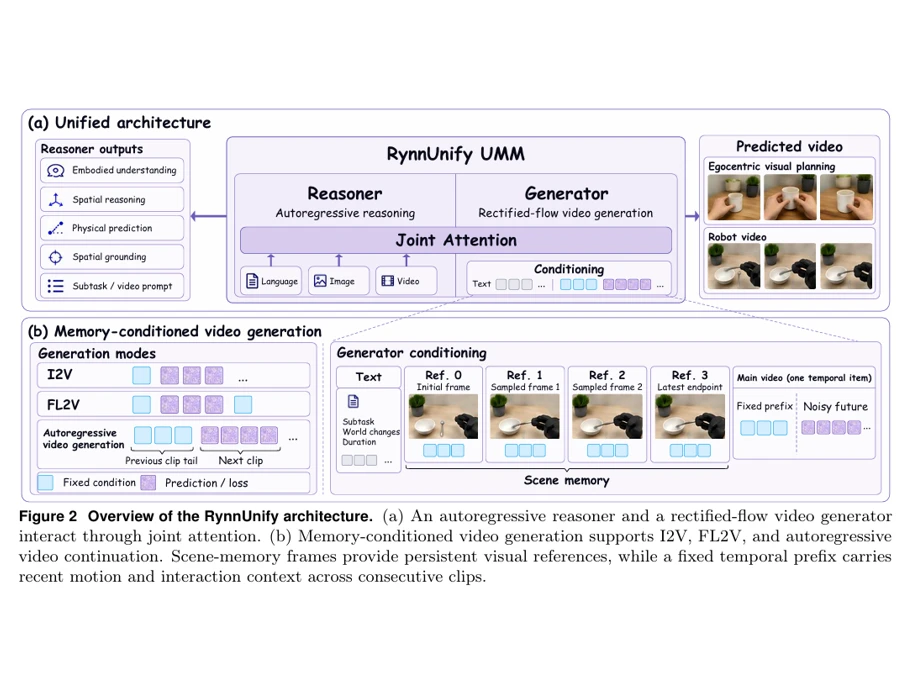
Alibaba DAMO Academy Introduces RynnUnify, a 16B Unified Embodied Model Pairing 8B Reasoning with 8B Video Generation
On October 23, Alibaba DAMO Academy and Hupan Lab published a paper on RynnUnify, a 16-billion-parameter unified embodied model that uses an 8B reasoning module and an 8B video generator to predict future scene changes and guide sequential robotic actions.

Nature Will Debuts Natura-1, a 50B-Parameter Embodied Foundation Model Trained on One Million Hours of Human Experience
On October 13, Nature Will—founded by Ding Ning, assistant professor and doctoral supervisor at Tsinghua University's Department of Electronic Engineering—released Natura-1, its first general-purpose embodied foundation model, along with a technical report. The 50-billion-parameter mixture-of-experts model was pretrained on more than one million hours of first-person human video and can drive a 20-DOF dexterous hand within a 100-millisecond control loop.
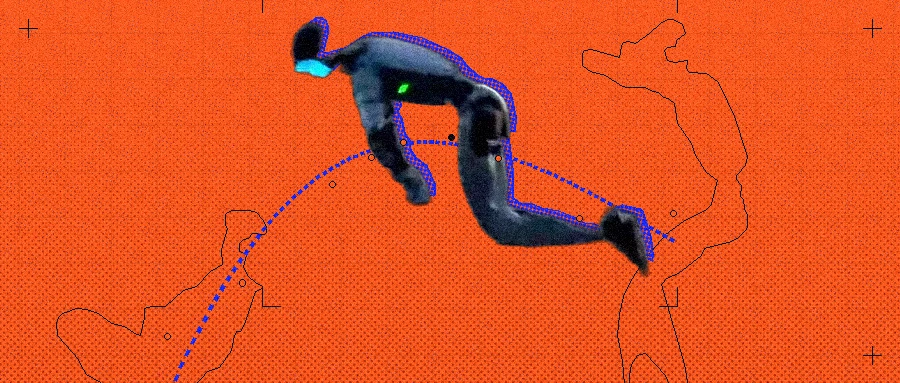
UC Berkeley's SuperMimic Slashes Compute for Humanoid Whole-Body Control
Accepted as an oral paper at CoRL 2026, the SuperMimic framework uses a differentiable world model to train humanoid whole-body control on a single GPU in three hours, outperforming previous methods that required massive GPU clusters.
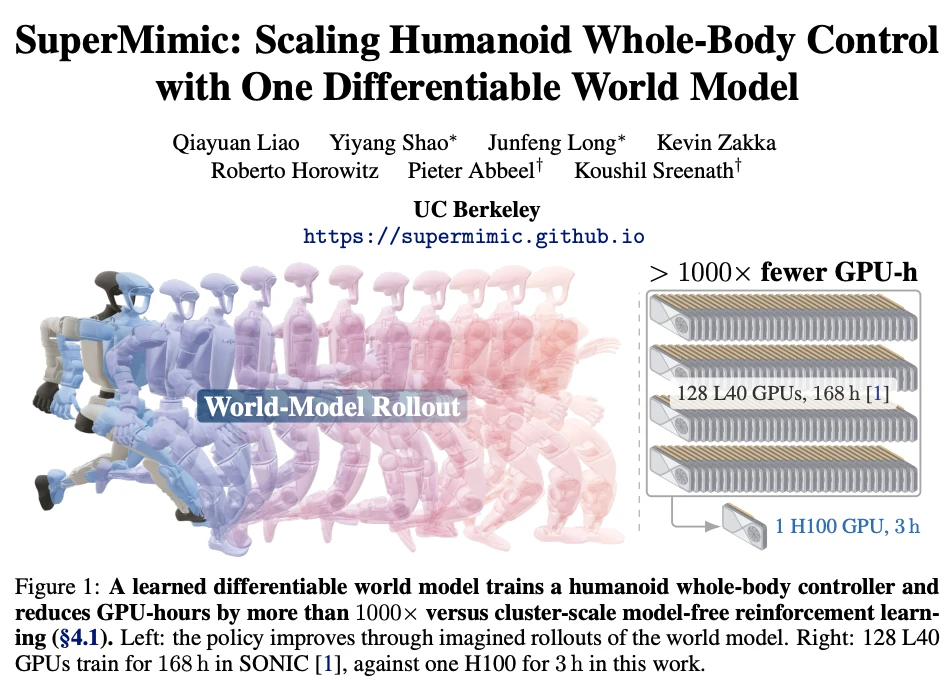
UC Berkeley's SuperMimic Trains Humanoid Whole-Body Control on a Single GPU in 3 Hours, Surpassing 128-GPU Baseline
A UC Berkeley team introduced SuperMimic, a framework that uses a single differentiable world model to scale humanoid whole-body control. The approach trains on a single NVIDIA H100 GPU in 3 hours to outperform the SONIC baseline, which required 128 NVIDIA L40 GPUs over 7 days, reducing GPU-hour costs by more than 1,000 times.
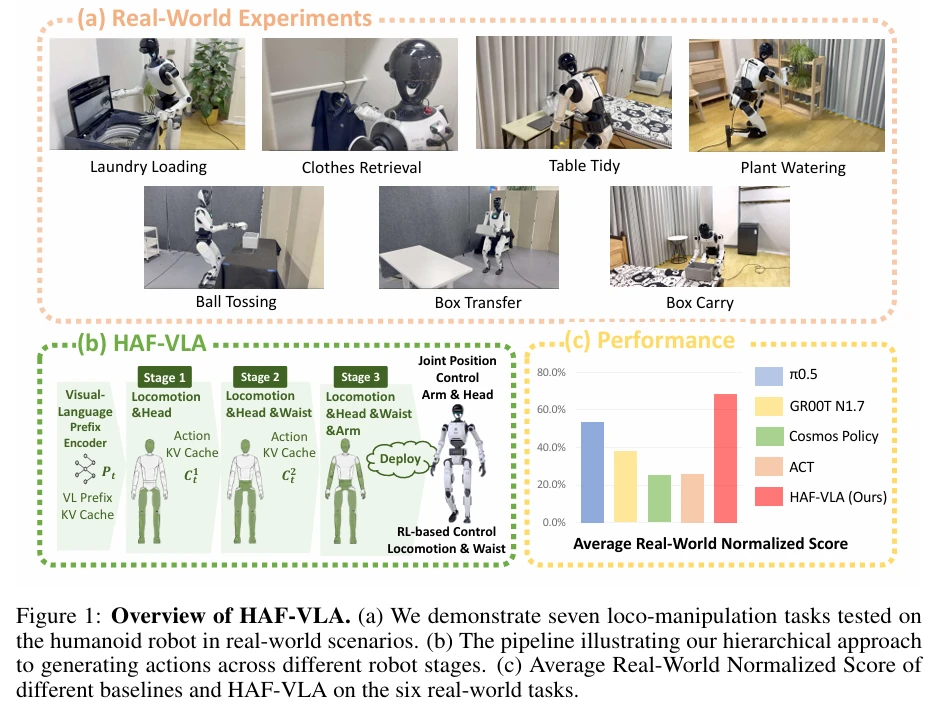
HAF-VLA Enables Hierarchical Generation of Coordinated Full-Body Actions in Humanoid Robots
A joint team from Peking University, Tsinghua University, and other institutions has proposed HAF-VLA, a hierarchical framework that enables humanoid robots to generate coordinated full-body actions by sequentially planning movements along the kinematic chain to avoid compensatory instability.
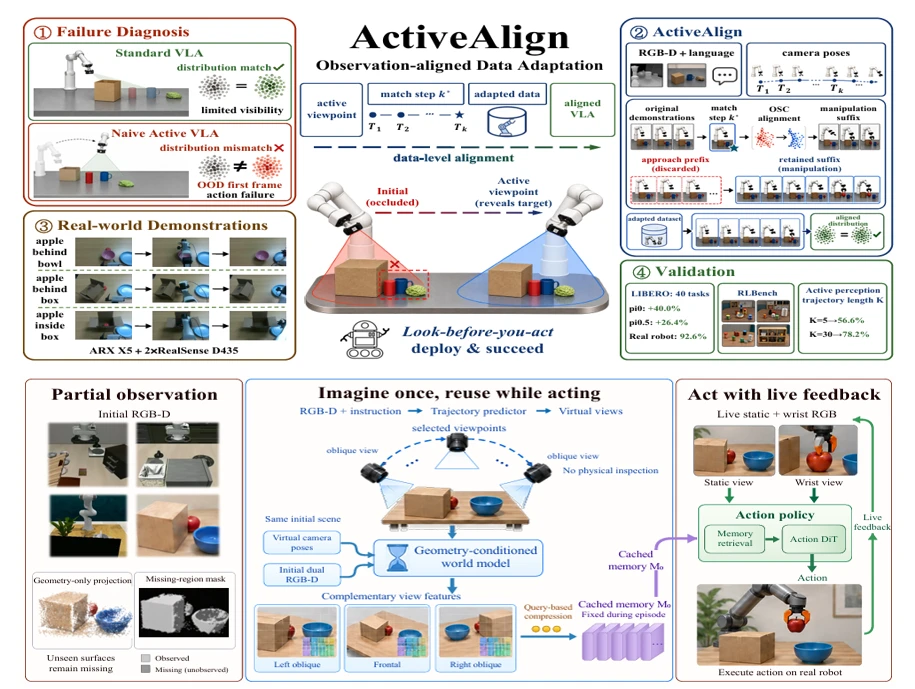
Fudan Team Bridges Active Perception and Vision-Language-Action Models to Overcome Viewpoint Shifts
Two papers from Fudan University introduce ActiveAlign and AWAM, which align training data and representations with active camera movements to prevent distribution shifts in vision-language-action models when robots adjust their viewpoints to overcome occlusions.