

World Models
28 related stories

ACE Robotics and Nanyang Technological University Release Mundo, an Interactive World Model
On October 30, ACE Robotics and the S-Lab at Nanyang Technological University released Mundo, an environment-specific world model that converts a small number of images or videos into explorable, interactive 3D scenes for robot navigation and manipulation training. The system integrates 3D scene representation, physical simulation, and video generation with Astra to enable spatial understanding.
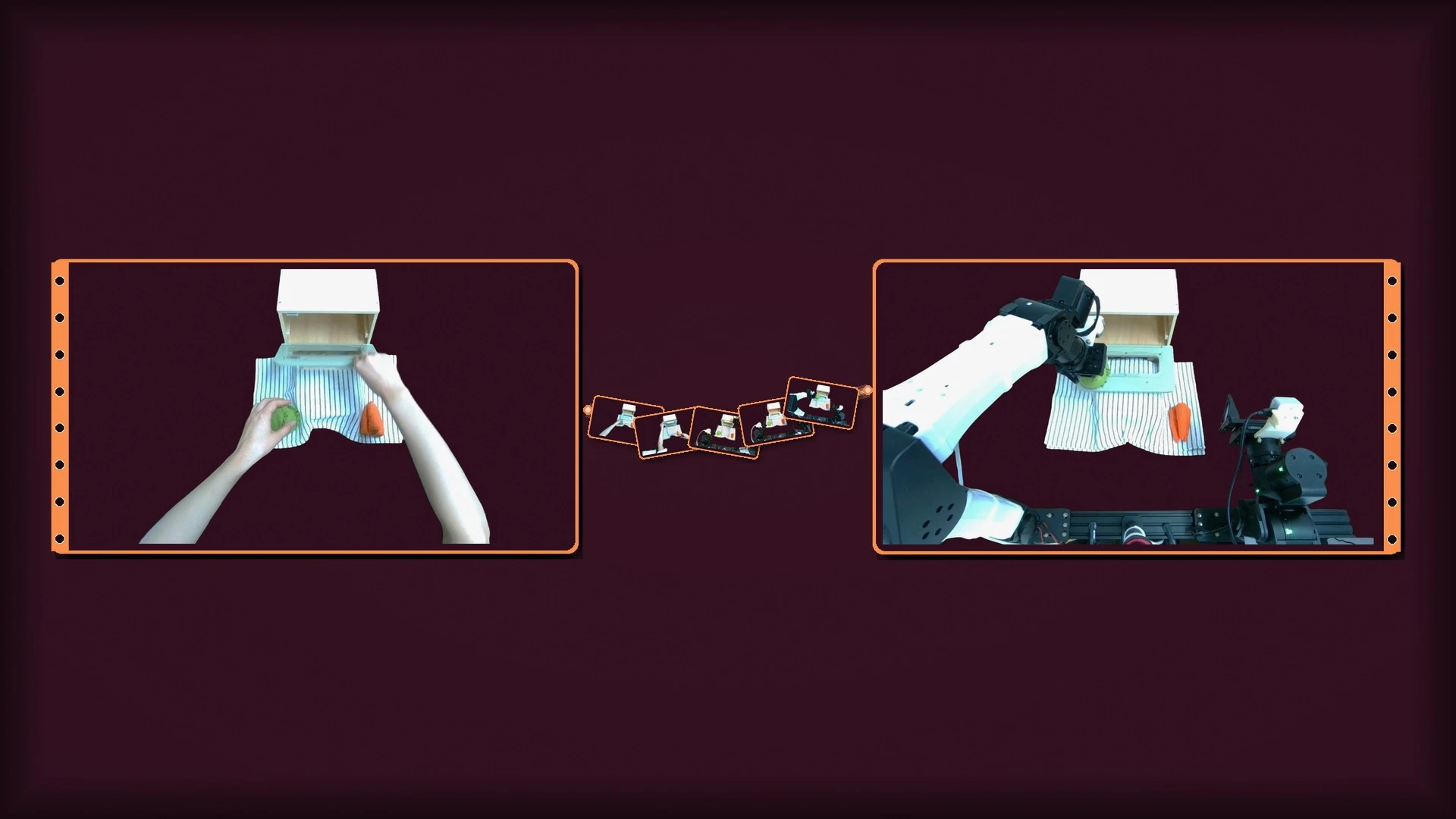
NVIDIA Proposes ThinkWorld to Train VLAs on Unannotated Human Videos via Chain-of-Dynamics and Imagined Futures
NVIDIA and KAIST introduce ThinkWorld, a vision-language action framework that leverages chain-of-dynamics reasoning and imagined future states to extract training signals from unannotated human videos for robot policy learning.
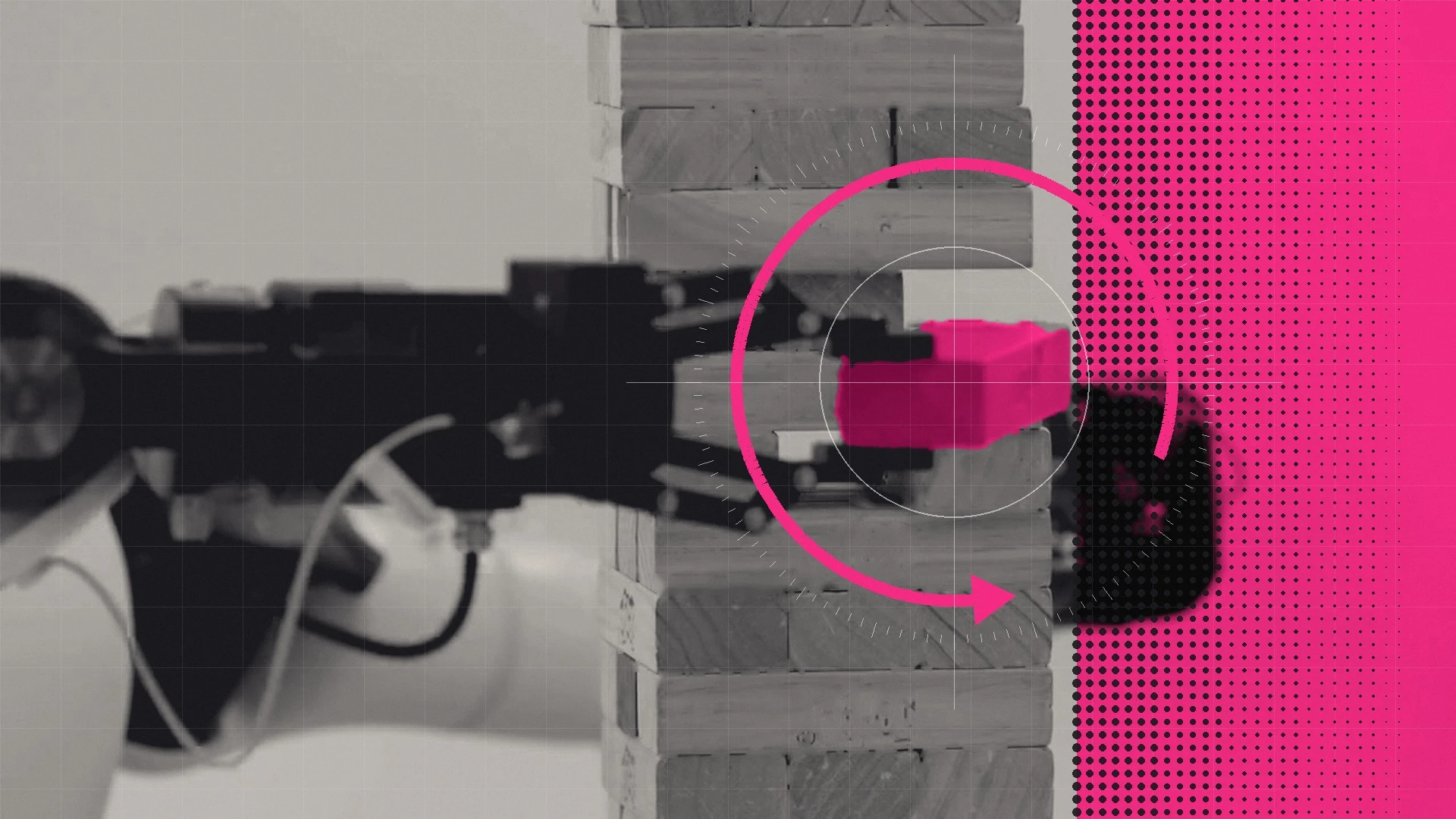
AgiBot's Rollback Method Uses World Model 'Rewind' to Surpass Human Averages in 8 Hours of Real-Robot Training
AgiBot, Beihang University, and the National University of Singapore introduced Rollback, a policy improvement method that backtracks within a world model to explore alternative actions. Trained on a single real robot for eight hours, the approach outperformed human baselines in ball tossing and tabletop curling by eliminating costly physical scene resets.
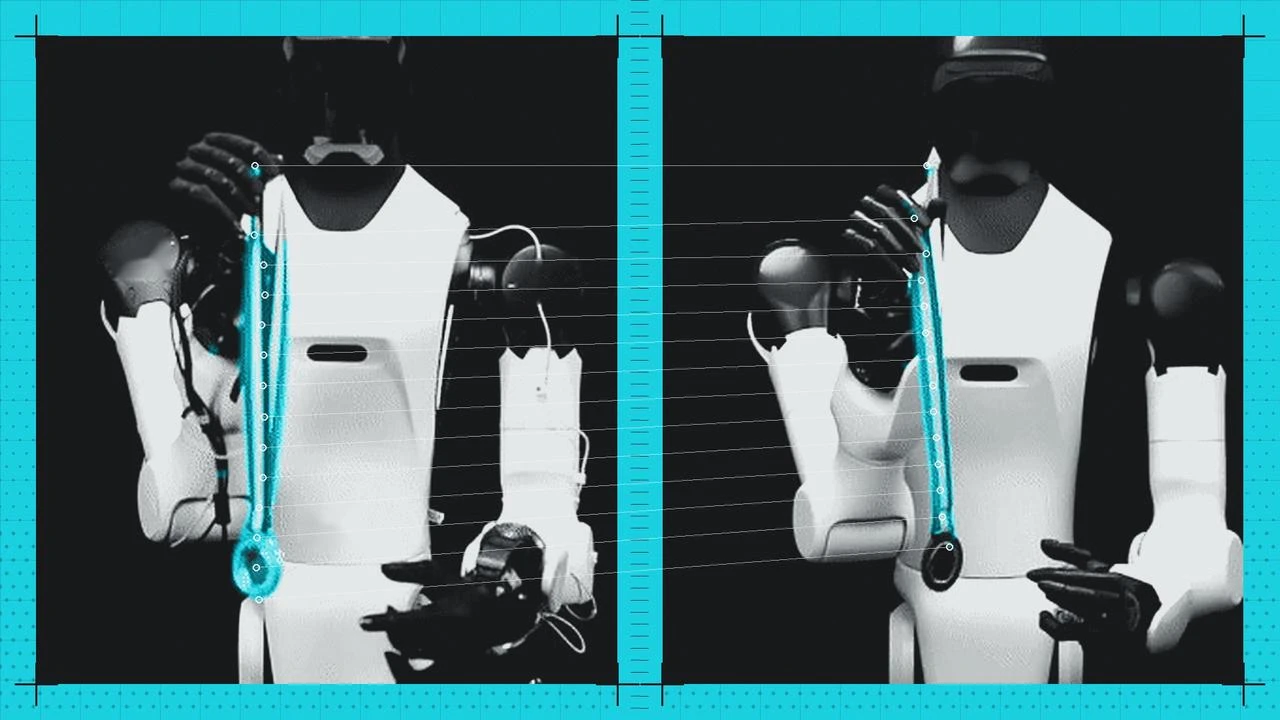
AgiBot Upgrades Genie Sim to Unify Robot Training and Evaluation via Flexible-Body Simulation
Folding a towel or tightening a drawstring bag is simple for humans but challenging for robots, as fabrics and ropes continuously deform and contact friction alters subsequent manipulation conditions. If simulation fails to replicate these dynamics, robots may perform well virtually but fail in real-world deployment.

Google DeepMind Unveils Genie 4, the First World Model in the Series to Generate Native Audio
Google DeepMind has released Genie 4, a new real-time interactive world model that natively generates audio, prompting questions about how close such sounding, simulated environments are to being used for robot training.

UC Berkeley's SuperMimic Slashes Compute for Humanoid Whole-Body Control
Accepted as an oral paper at CoRL 2026, the SuperMimic framework uses a differentiable world model to train humanoid whole-body control on a single GPU in three hours, outperforming previous methods that required massive GPU clusters.
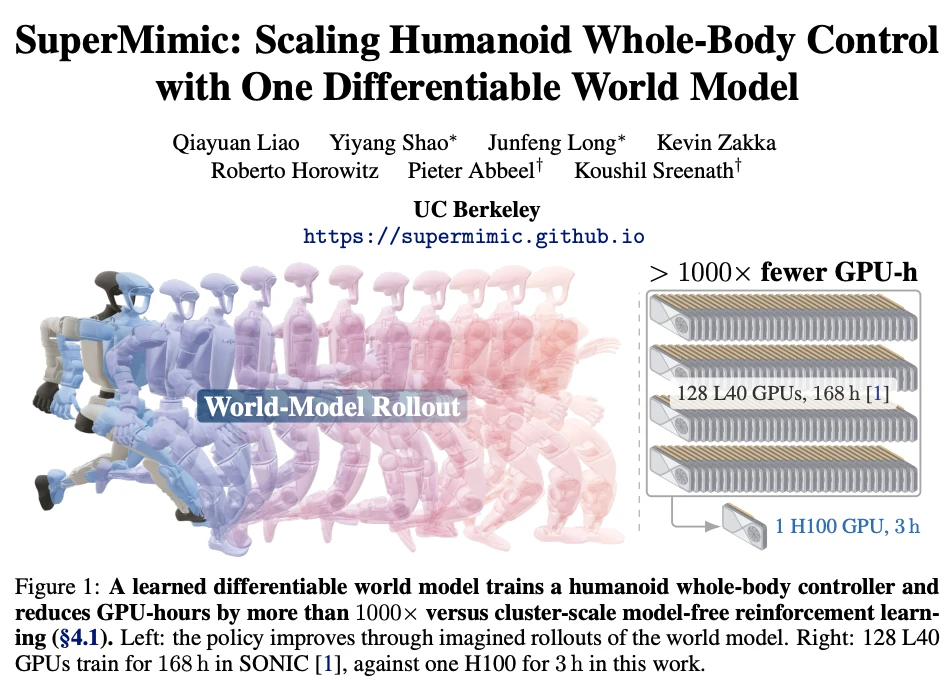
UC Berkeley's SuperMimic Trains Humanoid Whole-Body Control on a Single GPU in 3 Hours, Surpassing 128-GPU Baseline
A UC Berkeley team introduced SuperMimic, a framework that uses a single differentiable world model to scale humanoid whole-body control. The approach trains on a single NVIDIA H100 GPU in 3 hours to outperform the SONIC baseline, which required 128 NVIDIA L40 GPUs over 7 days, reducing GPU-hour costs by more than 1,000 times.
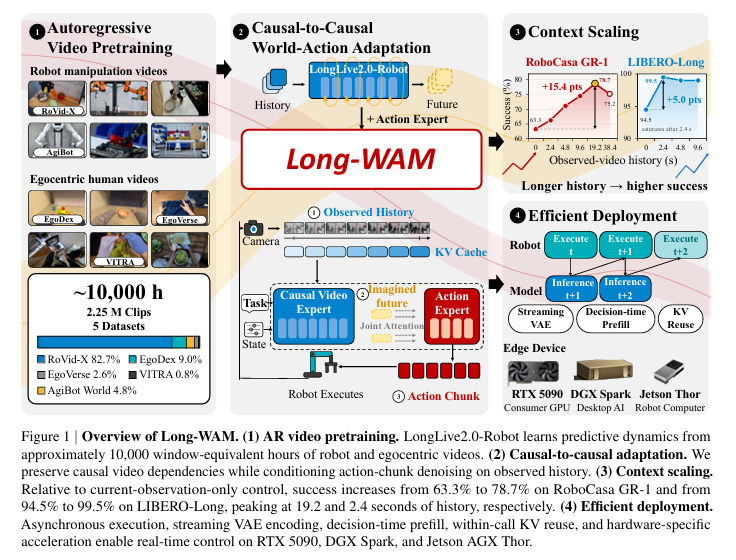
NVIDIA and MIT Researchers Show Long-Context Robotics Requires Autoregressive World Models
A joint paper from NVIDIA, MIT, HKU and UCSD demonstrates that simply extending visual history does not improve robot control; the model must first learn autoregressive prediction to effectively use long contexts. On the RoboCasa GR-1 platform, task success rates rose from 63.3% to 78.7% when context was extended to 19.2 seconds.

Yann LeCun’s Latest JEPA Paper: Where Does End-to-End Planning Go Next?
A new paper from Yann LeCun’s team introduces H-JEPA, a hierarchical world model that improves long-horizon planning success rates from approximately 18% to 73%. The architecture separates temporal scales to enhance stability and reduce computational costs in embodied AI tasks.
Tactile sensing emerges as the next critical data modality for robot learning at IROS 2026
At IROS 2026 in Pittsburgh, sessions on tactile sensing were fully packed, highlighting a critical gap: while vision records appearance and motion, it cannot capture contact physics. Researchers from MIT, Columbia University, and Amazon presented low-cost sensors and human-demonstration methods to scale tactile data collection.

RIMBOT Unveils Physical RSI Framework, Targets Industrial Validation
RIMBOT, a robotics startup founded in March 2026, is deploying its Physical Recursive Self-Improvement framework in industrial ICT testing lines. Co-founder Yuanxin Zhong explains why factories offer the necessary failure data and infrastructure to move beyond zero-shot generalization toward continuous real-world learning.
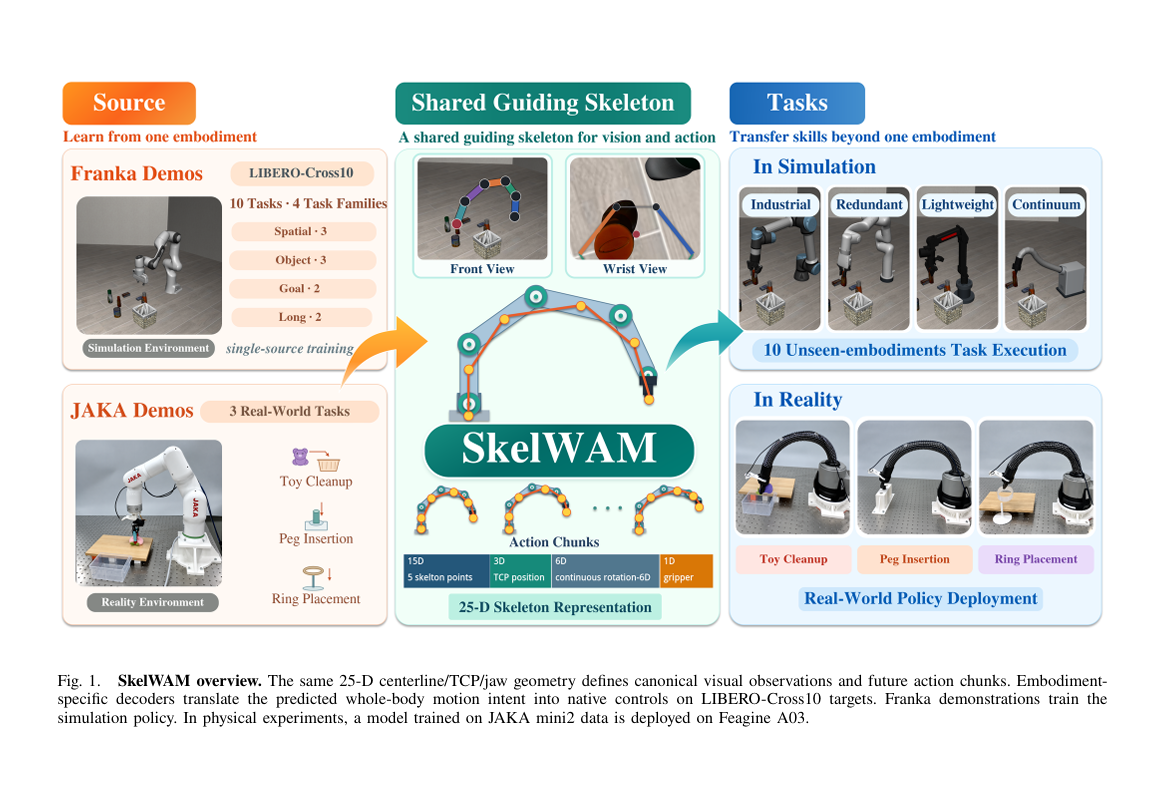
Tsinghua and Peking University Teams Release SkelWAM for Zero-Shot Cross-Embodiment Manipulation
Researchers from Tsinghua University and Peking University have introduced SkelWAM, a skeleton-guided world-action model that enables zero-shot transfer of manipulation policies across ten different robotic arm structures without retraining.