

World Models
28 related stories
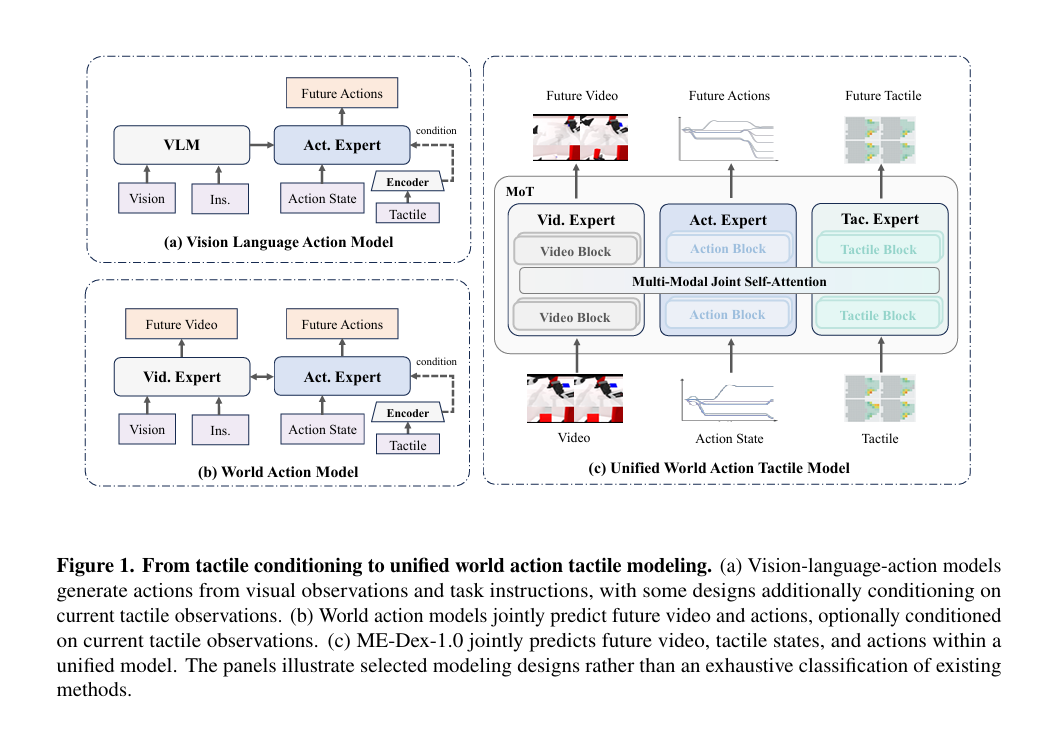
Li Auto's ME-Dex 1.0 Predicts Future Tactile States Alongside Visual Observations
Li Auto’s foundation model team released ME-Dex 1.0, a world action model that treats tactile sensing as a parallel prediction target to video. By aligning heterogeneous tactile data from five different hands into a unified representation, the system significantly improves success rates in high-contact dexterous manipulation tasks.
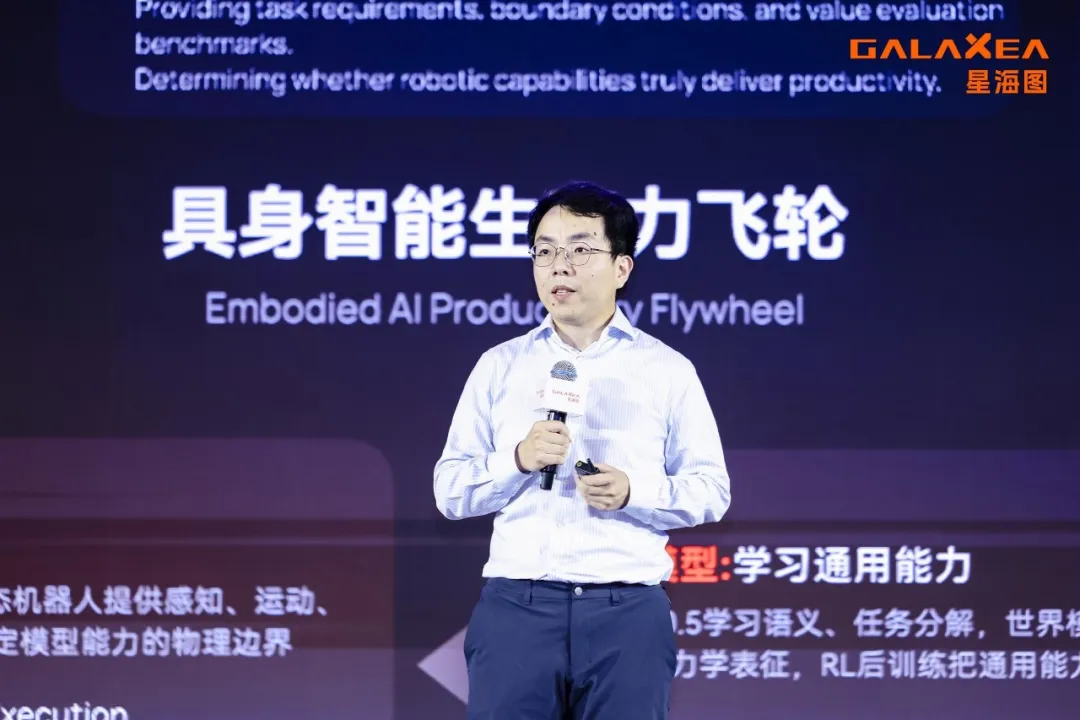
Galaxea's Hang Zhao: The Next Embodied AI Scaling Goes Beyond Pre-Training
At the 2026 WRC Forum, Galaxea Chief Scientist Hang Zhao argues that Embodied AI's next scaling depends not just on pre-training data and models, but on continuous learning from real-world operations through post-training and real-robot reinforcement learning.

INTACT: Search-Free World Model for Robotics Achieves Faster, More Reliable Control
Researchers propose INTACT, a search-free world model framework that aligns physical and goal intentions using a shared operator. Achieving 95.33% success rate with 300x faster inference than LeWM, it upgrades JEPA from prediction to deployable control.

How 500,000 Hours of First-Person Video Can Add 'Touch' to Embodied World Models
BeingBeyond releases Being-H0.8, a latent tactile world-action model trained on over 500,000 hours of first-person video. By generating pseudo-tactile labels from visual data and unifying robot sensor inputs, it aims to bridge the gap between visual observation and physical contact for embodied AI.

Tencent Open-Sources Three Embodied AI Models to Build a Unified Robotics Foundation
Tencent's Robotics X Lab and Futian Lab, in collaboration with Hunyuan, have released three open-source embodied AI foundation models based on the Hunyuan large model: Hy-Embodied-VLM-1.0, Hy-Embodied-RxBrain-1.0, and Hy-Embodied-VLA-0.5.

GigaAI and Tsinghua University Release GigaWorld-1 to Use World Models as Robot Evaluators
As physical evaluation bottlenecks slow down embodied foundation model iteration, GigaAI and Tsinghua University release GigaWorld-1, using world models as evaluators to reduce reliance on real-world robot testing. Xiaofeng Wang discusses how this approach can accelerate development cycles.
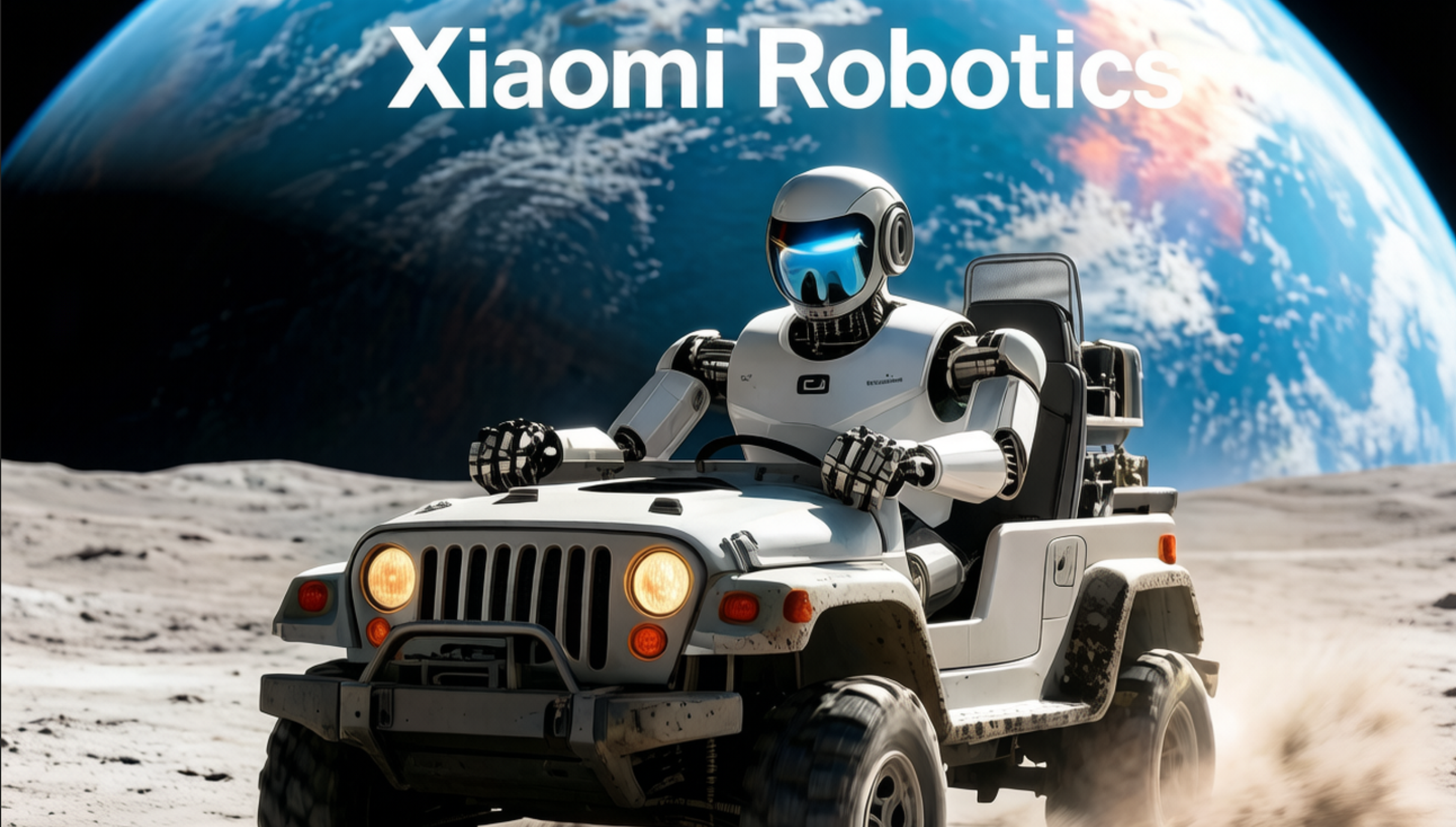
Xiaomi Turns World Model Into a Data Engine, Beyond Prediction
Xiaomi has open-sourced U0, a 38B-parameter multimodal model that integrates five embodied synthesis functions. By treating embodied generation as a natural extension of foundation models rather than domain-specific fine-tuning, U0 acts as an expandable data engine, significantly enhancing robot generalization in real-world scenarios.
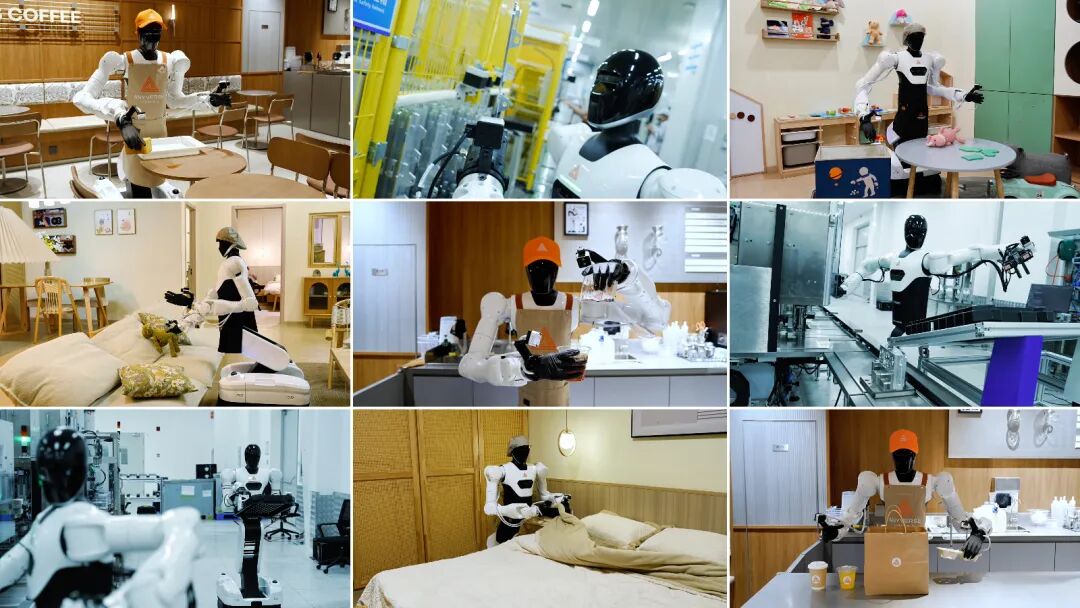
After Raising Hundreds of Millions, WuJie Dynamics Launches MWA Latent World Model
WuJie Dynamics officially released the MWA Embodied General Brain, a latent space world model based on long-horizon bidirectional physical causal chains, and topped the RoboCasa GR1 TableTop leaderboard. The company recently completed a $200 million angel round.
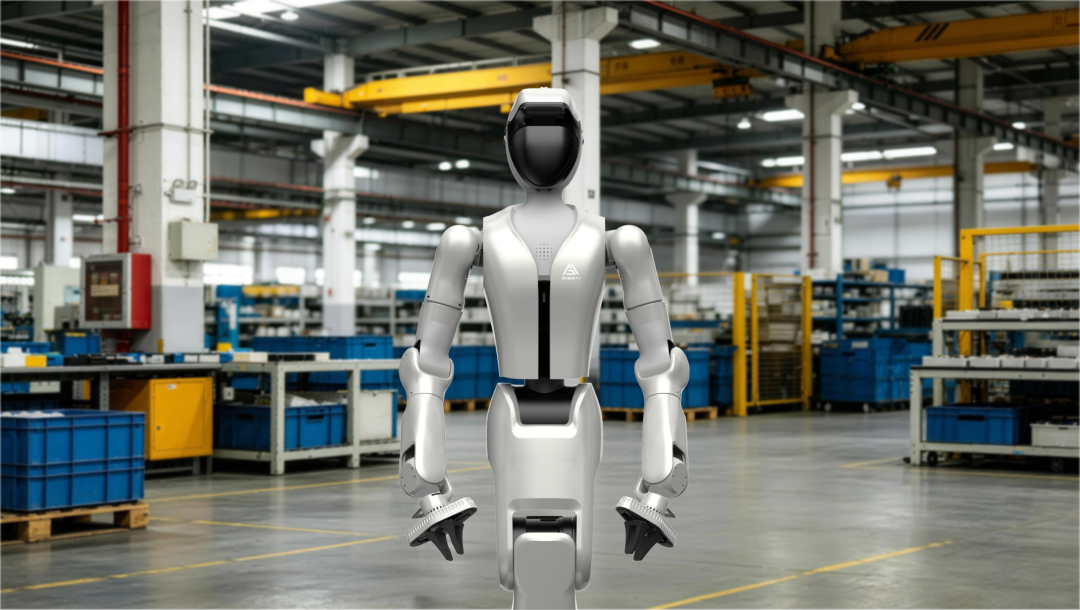
GigaAI Secures RMB 1 Billion in Funding to Bring World Models to Homes and Factories
JiJia Vision has completed a 1 billion RMB B2 round of financing, bringing its total funding to 3.5 billion RMB in just three months. The company is leveraging its "Dual Pyramid" data and algorithm system to deploy embodied AI with world models in both C-end home scenarios and B-end industrial applications.

Robotics Startup Unveils 'Fastest' World Model After Reaching a 10-Billion Valuation
StarSeaMap's Fast-WAM boosts robot reaction speed by 4x by decoupling training from inference, proving world models rely on implicit physics understanding rather than explicit future video generation.
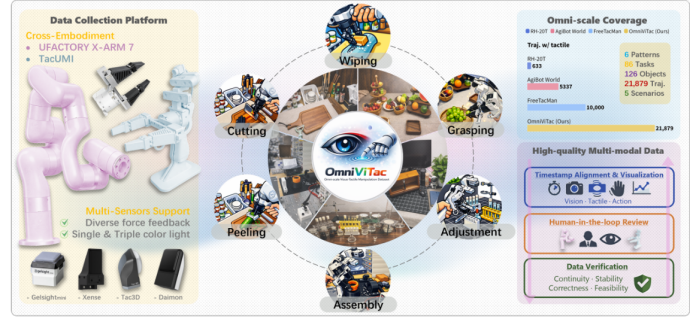
TARS together with Six Institutions Unveil OmniVTA Tactile-Visual World Model
TARS, in collaboration with six institutions including NUS and Tsinghua University, releases the OmniVTA framework and OmniViTac dataset, enabling robots to transition from passive perception to active tactile prediction and closed-loop control for dexterous manipulation.

Skild AI Raises RMB 9.8 Billion in Series C; 1X Unveils World Model Progress; LimX Dynamics Releases Embodied AI Agent System
Sklid AI completes a $1.4 billion (approx. 9.8 billion RMB) Series C round led by SoftBank, raising its valuation to over $14 billion. Meanwhile, 1X introduces its generative world model 1XWM for robotic autonomy, and LimX Dynamics launches COSA, an embodied agent OS for humanoid robots.